
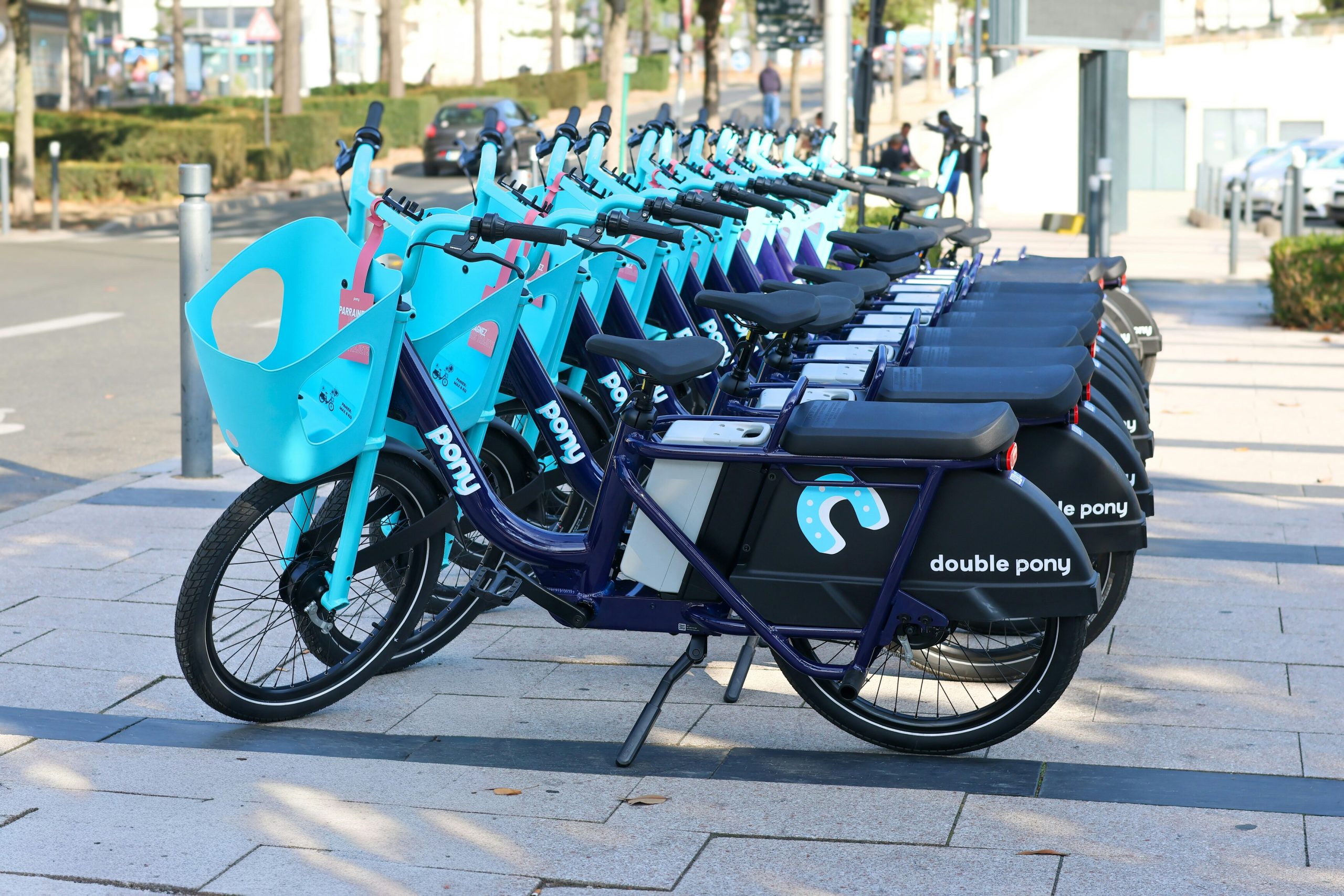
Uber and Airbnb made trading with strangers feel ordinary, but the biggest changes may still be ahead. Michael Munger discusses transaction costs, trust, the future of ownership, and how AI agents could reshape economic life, as well as the downsides of making everything easy to trade.
About the Guest
Michael Munger is the Pfizer/Pratt University Professor of Political Science and Economics at Duke University. He is a past president of the Public Choice Society and currently serves as president of the Philadelphia Society. His work focuses on the morality and mechanics of commercial exchange. He is the author of Tomorrow 3.0 and Is Capitalism Sustainable?, among other books.
Interview
Simon Sarevski: Not all our readers are economists, so let’s start with the basics. What are transaction costs, why do they matter, and how can reducing them change the way an economy works?
Michael Munger: Transaction costs are all the costs of making an exchange happen other than the price itself. I break them into three “T’s.” Triangulation: finding out who has what I want, what it’s like, and agreeing on terms. Transfer: actually moving the payment and the good, safely and quickly. Trust: being confident the other person will do what they promised, and that I’ll have recourse if they don’t.
They matter because most mutually beneficial trades never happen. Not because nobody would gain, but because the cost of arranging the deal eats up more than the gain. Reduce those costs and a whole universe of exchanges that were always latent suddenly becomes possible. That is the real story of economic history: not just making things more cheaply, but making it cheaper to get things to the people who value them most.
Uber and Airbnb make exchanges between strangers possible at a scale that would have been hard to imagine a generation ago. Which transaction costs have proved hardest to overcome, and what kinds of exchange remain out of reach?
Michael Munger: Trust has been the hardest, by far. Triangulation and transfer are, at bottom, information problems, and software is very good at information problems. Trust is a problem about people, and about what happens when things go wrong. Ratings systems work remarkably well for routine transactions, but they work poorly for things that are rare, high-stakes, or hard to evaluate even after the fact.
So the exchanges still out of reach are the ones where quality is invisible or delayed: child care, elder care, medical advice, home repairs where the shoddy work shows up two winters later. Also anything involving very intimate access to your body, your home, or your children. And, of course, exchanges where the obstacle is not transaction costs at all but the law: licensing, zoning, and incumbent protection are artificial transaction costs, and software can’t write its way around a statute.
In 2019, I was aware of the real-world changes brought about by the Ubers and Airbnbs of the world. It took reading Tomorrow 3.0 for me to connect them to falling transaction costs. Looking back, I overestimated how far this transformation would go. Was I wrong about its potential, or are we still only beginning to see its effects?
Michael Munger: You were wrong about the timing, not the direction. So was I. Economists are good at saying what will happen and terrible at saying when. Technologies are adopted quickly; institutions change slowly. Most of the friction turned out to be not technical but political and legal: regulators, incumbents, insurers, and courts all had to catch up, and many of them had reasons not to.
I also think we focused on the wrong margin. Uber and Airbnb were the visible part, the part with logos. The deeper change is that we now take for granted that you can find, verify, and pay for almost anything in seconds. That has quietly reorganized retail, labor, logistics, and how people find each other. And with AI agents that can search, negotiate, and execute on your behalf, the next round of transaction-cost reduction may be larger than the first. We are still early. I talked more about this in the next book, The Sharing Economy, published by IEA (and available as a free download!).
——Related: Amir Shani on tourism and the sharing economy——
Residents of historic European cities have increasingly raised their pitchforks against tourists and short-term rentals, blaming them for making their cities less affordable and less livable. Am I wrong to see this backlash as a threat to the benefits of lower transaction costs?
Michael Munger: It is a threat, but you shouldn’t dismiss the complaints. Residents are not imagining the problem. When a building fills up with rolling suitcases, the people who live there bear real costs: noise, crowding, the loss of the neighborhood bakery to a souvenir shop. Those are genuine externalities, and the people bearing them didn’t get paid.
But the diagnosis is usually wrong. Short-term rentals didn’t create the housing shortage; they revealed it. In fact, the reason you can make so much money on short-term rentals is that the housing stock is artificially suppressed by regulation.
Old cities have almost entirely frozen their housing stock, so any new demand, from tourists, students, or remote workers, shows up as higher prices. Banning the platform treats the symptom. The better responses are to price the externalities directly (tourist taxes, congestion charges, enforced nuisance rules) and to let more housing get built. The danger is that cities choose the ban, because it’s visible and satisfying, and in doing so they kill something genuinely valuable.
——Related: Kristian Niemietz and why Britain stopped building——
A growing fear is a future in which we own little and rent everything. But if falling transaction costs make access cheaper and more convenient, couldn’t owning fewer things actually improve our lives? Is our attachment to ownership partly a product of the limitations of our time?
Michael Munger: Yes, largely. Why did people own a drill they used for thirteen minutes in its whole life? Because it was too costly to find someone who had one and was willing to lend it. Ownership was, in part, a solution to high transaction costs. If you can get the services of a thing reliably, at the moment you want it, owning the thing itself becomes much less important. Most people don’t want a car; they want to be somewhere else.
But I want to be careful. Ownership is also about control and independence. If you rent everything, you are at the mercy of whoever controls the platform, and they can change the terms, raise the price, or cut you off. So the fear isn’t crazy. The answer is competition: renting is wonderful when there are many providers and terrible when there is one. And some things we will always want to own because ownership itself is part of their value: our homes, heirlooms, the things that make us who we are.
If technology makes it cheaper to coordinate economic activity through markets, will firms become smaller and rely more on independent contractors, or will new technologies create reasons for firms to grow even larger?
Michael Munger: Both, and that’s exactly what Coase would predict. Firms exist because using the market is costly. When technology lowers the costs of market contracting, the boundary of the firm moves inward, and you see more outsourcing, more gig work, more contractors. That has clearly happened.
But the same technology can lower the costs of internal management even more. Software lets a single firm monitor, coordinate, and direct millions of transactions it could never have handled before. And platforms themselves enjoy strong network effects, which push toward a few very large firms. So the likely pattern is a barbell: enormous platform firms at the center, and a great many very small firms and individuals working through them. What gets squeezed is the middle, the medium-size firm whose main job was coordination.
—Related: Steve Davies on automation and the future of work—
The internet and smartphones dramatically lowered the transaction costs of finding and coordinating with other people. AI is poised to lower them further by automating tasks and reducing the need for intermediaries. How will this change the way we organize economic life, and where do you expect the biggest changes?
Michael Munger: The biggest change is that the intermediary may become software working for you rather than a company working for itself. Today, a platform stands between buyer and seller and takes a cut for triangulation and trust. An AI agent that can search, compare, negotiate, and verify on your behalf could do much of that, and its loyalty would run to you, at least in principle.
I expect the largest effects in professional services that are, at heart, information brokerage: much of law, accounting, insurance, real estate, travel, and routine medicine. Those professions are often protected by licensing, so the fight will be political as much as economic. The other big change is that very small firms, even one person, will be able to do things that used to require a staff. That could produce a revival of the small proprietor, which would be a good thing for a free society.
When technology makes it easier and cheaper to do something, the consequences aren’t always what we expect. What are some of the less obvious downsides of reducing transaction costs?
Michael Munger: First, lower transaction costs make bad things cheaper too. Fraud, scams, harassment, and organizing mobs all got easier at the same time that renting a spare room did.
Second, things that were outside the market because commodifying them was too costly can get pulled in. Some of those things, like favors among neighbors, or helping a friend move, were held together by reciprocity and relationship. When everything can be priced, we may lose some of the social fabric that those informal exchanges sustained.
Third, the people who used to earn a living from the friction lose. Middlemen, local monopolies, and protected professions are not villains, but they are real people with mortgages, and their resistance is the main source of political backlash.
Finally, there’s concentration. The firms that sell reductions in transaction costs often enjoy network effects, and once they dominate, they may stop passing the savings along.
When you wrote Tomorrow 3.0, what did you expect to happen that hasn’t—or, better yet, what happened differently than you anticipated? Has anything since changed your thinking?
Michael Munger: I expected the transition away from owning cars, and many other durable goods, to come faster. Autonomous vehicles have advanced, but more slowly and more unevenly than I thought, and without them the economics of giving up car ownership were weaker than I hoped.
What I didn’t anticipate was how the pandemic would accelerate a different transaction-cost revolution: remote work. Suddenly the cost of hiring someone who lives eight hundred miles away fell close to zero. That reshaped labor markets and cities more than ridesharing did.
I also underestimated how much the platforms themselves would change once the venture capital ran out. Prices went up, fees went up, and the companies started acting more like incumbents. That has made me think harder about contestability. Selling reductions in transaction costs is a wonderful business, but it stays wonderful for consumers only if someone else can sell those reductions too.
What are we failing to imagine?
Michael Munger: Mostly, we are failing to imagine new kinds of exchange. We always picture the future as the present with better gadgets. But the big gains come from transactions that literally could not happen before, so nobody thinks of them. Before eBay, nobody imagined a global market for broken laptops.
The deepest one is probably machines transacting with machines. When AI agents can find each other, negotiate, and settle contracts in milliseconds, very small and very short exchanges become feasible: renting a few minutes of someone’s expertise, a slice of computing power, a seat in a car that’s going your way anyway. Markets could become far more granular than anything we’ve seen.
We’re also failing to imagine how much of what we think of as government regulation was really a substitute for trust. If verification and reputation become cheap and reliable, a lot of licensing and inspection may simply become obsolete, and the institutions that depend on them will not go quietly.
As we approach the end, how do you find freedom in an unfree world?
Michael Munger: Start with the classics. Ronald Coase’s essay The Nature of the Firm and F. A. Hayek’s The Use of Knowledge in Society are short and still say most of what matters. Oliver Williamson, if you want the full machinery of transaction cost economics.
Then Leonard Read’s I, Pencil, which you can read in ten minutes and think about for a lifetime. Matt Ridley’s How Innovation Works and Deirdre McCloskey’s Bourgeois Equality, on why innovation took off when and where it did. Arun Sundararajan’s The Sharing Economy, for the platform side. Martin Gurri’s The Revolt of the Public, on what lower information costs did to politics. And, for the long view of how institutions make trust possible among strangers, Douglass North’s Institutions, Institutional Change and Economic Performance.
This interview started with Tomorrow 3.0. Which books would you recommend to take us further down this path of thinking?
Michael Munger: You’re borrowing Harry Browne’s title, and I think his answer still holds up: you find freedom mostly by refusing to wait for the world to grant it. Spend your time on the things you control, and stop trying to persuade everyone else first.
For me, freedom is voluntary association. You choose your friends, your work, your projects, the people you argue with. A university, a podcast, a classroom full of students who are free to disagree with you: those are small, voluntary orders, and they are worth more than most of what happens in politics. I did run for governor of North Carolina, and then NC House and Senate, so I haven’t given up on politics entirely. But the more important thing is living as if you are free, being honest, trading fairly, and treating other people as ends rather than means. Lower transaction costs help, because they give us more choices about whom to deal with. And the ability to say no, or walk away, is the biggest part of being free.