
Category: Culture

  • When Hollywood Forgets To Movie

    When Hollywood Forgets To Movie

    If you are like me and don’t want to go out when it’s scorching hot outside, no matter what day of the week it is, you’d probably pop in for a movie. In my search for a good Friday night movie, Now You See Me: Now You Don’t popped up. And of course, like any proper movie lover, I rewatched the first two movies in the series, only to be disappointed. Not that I didn’t see the problems when I first watched them, but seeing them again irritated me. It prompted me to write these few words about a feeling I have had for quite some time now: there are a few major problems that have become increasingly common in the movie world.

    Milking the Cow

    Movies today never seem to end. Think, for example, of the Marvel Cinematic Universe – or any similar project, for that matter – a universe that keeps expanding, with multiple new superheroes and stories constantly being introduced. And it works precisely because it is meant to work that way. There is nothing inherently wrong with having an expanding universe. At the same time, it doesn’t always work either, as the box office can tell us. But when they faltered, it was not because they lacked the tools to tell good stories. They simply produced subpar movies on many occasions.

    And then think of the many other major successes that simply could not be left alone. James Cameron’s Avatar, a major success by more than enough metrics, was not enough. It had to have sequels. Katniss Everdeen overthrew the regime and got her sort of happily ever after. We cheered at the conclusion. Her story was over, and yet the Hunger Games world keeps growing. Harry Potter was no different: Harry’s story had an ending, but the world didn’t stop expanding through new stories and movies.

    The magical world of Harry Potter can offer so much – after all, it’s magical. But once it has given us a satisfying ending, what do we really gain by reopening it, simply because it remains commercially valuable?

    To wrap things up here, I’ll use one of my favorite movies, V for Vendetta. Not a perfect movie, but one that hit close to the mark in my book. It is a movie that I rewatch every few years, especially on the 5th of November. If it randomly pops up when I am changing the channels on TV, I stop right away. With that being said, what if there was a second, or a third, V movie? What if we had an origin story because the glimpse we got into V’s past in the movie was not enough? What if we were given the drama of post-revolution London because seeing the people wearing the masks, marching towards the barricades, was not enough? A new prequel or sequel, no matter how good it might be on its own, could ruin the experience of V for Vendetta simply because V’s story ended. Unlike in mathematics, adding sometimes takes something away: the mystery, the finality, and even some of the beauty of the story.

    Movies and Politics

    Coming from a rather non-conformist political persuasion myself, I often ask myself whether I am being unfair to a movie when its politics irritate me. And then I think of movies I like that were riddled with politics, much of which I strongly disagreed with, and I realize that it isn’t the politics themselves. It’s the way they are shoved down our throats.

    ———— Related: William Irwin: Living Without a Script ————

    Going back to where we started with Now You See Me: Now You Don’t, we will find that exact problem. When we are introduced to the new characters, we are suddenly thrown lines about a promising acting career being cut short by crippling student loans. Then comes the take that the “olds” broke the planet and that it is the younger generation’s job to clean up their mess, only for it to be followed by a simple “Am I wrong?” and a resounding “No.” The problem here is not whether I agree with the politics. It is the way the writers chose to present them to me, as if the movie itself needed to make sure I understood which side was right. And if you think I am exaggerating a single conversation in the movie, ask yourself whether anything about the story would change if we were not introduced to this flimsy backstory.

    On the other hand, one of my rather more enjoyable movies, A Time to Kill, has a perfect scene that is the total opposite. Where politics is done not only right, but in the best way possible: through the characters rather than through the writer. (I will not spoil the movie here, but if you have not watched it, you are missing out.) See, the movie takes place in 1984 in Mississippi, where two of the lawyers are discussing the death penalty during a meal. When they realize they differ on the issue, Ellen Roark (Sandra Bullock), an idealistic law student from Massachusetts, is offended and tells Jake Brigance (Matthew McConaughey), “For some reason I thought you were a liberal.” And this is the great part of the scene: we, the audience, are presented with two coherent arguments regarding the death penalty, and the scene ends. We know what the characters think and we know their motivations. We even understand their characters better after the scene. The movie allows for the disagreement to exist. By not resolving the issue, it leaves us to our own devices to make the decision about whose reasoning we support. We are left with a debate to be had about the issue after the movie, perhaps over lunch with the friends we have watched the movie with.

    Shitty Plots

    How many times have you heard someone say, “back in my day, x was better?” How many times have you said this? I know I have both heard this and said this at the same time. More often than not, I reckon, it’s just nostalgia for a different time when one was younger, living a life with far fewer obligations than adulthood brings. And yet, it does feel like good movies today are harder to find. You can, of course, blame everything but the movie itself. And that seems to be an increasingly easy way out in Hollywood. After all, the all-female Ghostbusters: Answer the Call was not a bust because its plot sucked, but because of misogyny at large. And Ghostbusters is hardly the only example of a movie that failed at the box office only to place the blame on something esoteric. I could pull plenty of others out of a hat; this is simply the first one that came to mind. Sometimes a movie is simply bad. Sometimes the plot sucks. And perhaps that is not such a complicated explanation after all.

    On the other hand, there have been some clear winners. Top Gun: Maverick is a good example. It had an excellent cast and played on our emotions with nostalgia. Then again, it had a derivative premise and derivative characters. And yet, it worked because it delivered on what it promised: among other things, a good and enjoyable plot. It gave us characters whose lives we cannot completely relate to – after all, we ain’t gonna be fighter pilots. But we were with them on the mission. We felt what they felt. We cheered when they won because we won with them.

    If you are more into the superhero genre, Superman (2025) and Spider-Man: Brand New Day are more recent examples. If mystery is more your thing, there is the Knives Out franchise. For something, in lack of better words, more fun, there is Bullet Train. And what do all these picks of mine have in common? They are good movies because they achieve what they promise to do. They give you the comedy, the superhero story, the mystery, or the action, while moving the plot forward and developing the characters along the way. They don’t need to reinvent the wheel. They simply need to make the wheel turn.

    What Hollywood Keeps Getting Wrong

    Am I contradicting myself throughout these words? Well, no. There are a few problems in Hollywood that can ruin the experience. You can blame the writers’ strike from a few years ago; you can blame CGI and AI; you can blame oversaturation of certain genres; you can even blame the audience, as some have done. To some degree, all of that might be the case, and more. But in the end, shitty plots make bad movies. Political messages that serve no purpose make bad movies, especially in an art form that people often turn to as an escape from the politics of everyday life. And, to make a full circle, constantly continuing movies in the same universes simply because they “will make money” makes bad movies too.

    A sequel isn’t inherently bad. A sequel after the story has ended, or one without a story worth telling, is. Politics in movies are no different: there is nothing wrong with characters having political beliefs, but there is a problem when the movie stops being a story and becomes an argument. And originality was never the measure of a good movie either – Home Alone is basically Die Hard for children, and yet both movies work! What matters is whether the moviemakers remember why moviegoers come to watch in the first place.

    The problem is not that Hollywood stopped being capable of making good movies. It is that good movies increasingly feel like exceptions rather than the default. But at the same time, it is us who still pay for shitty movies to be made. Remember, if no one is buying, no one would be selling.

    —— Related: Wonder Woman and the Wonders of Prosperity ——
  • The Last (stand of the) Samurai

    The Last (stand of the) Samurai

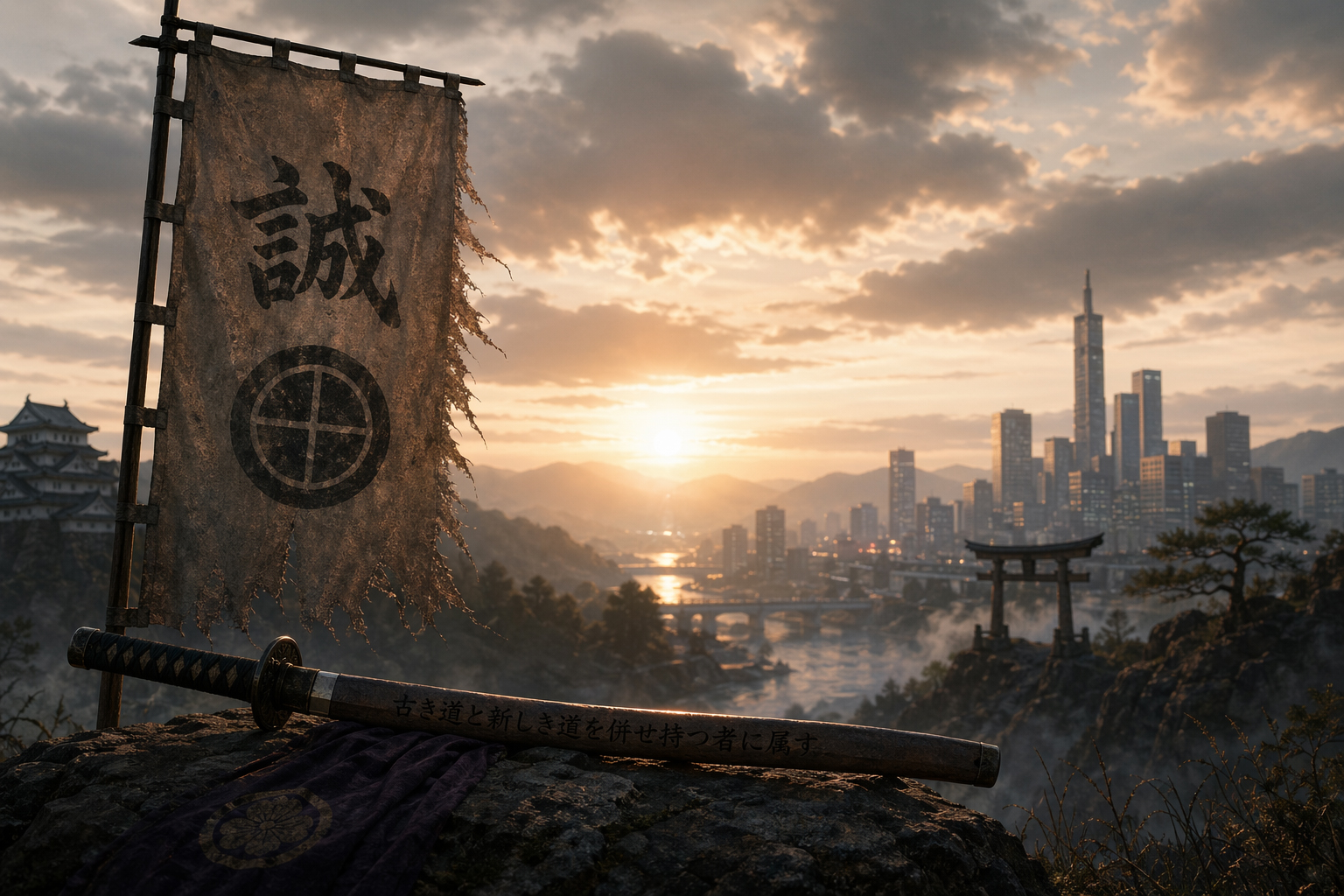
    You are in Japan around the year 1870. You are living in the early years of the Meiji Restoration, sometimes referred to as the Honorable Restoration. And if you ever thought of an unprecedented era, this was truly such an example, for most, if not all Japanese. Japan rapidly modernized and industrialized and, in the process, was ‘forced’ to adopt, among the new production methods, Western ideas and values.

    For a proud nation as Japan is, leaving the indigenous Japanese ‘spirit’ or cultural values behind seemed too high of a price to pay. When the whole political and social fabric of Japanese society underwent an overhaul after the introduction of the new way of life, a rebellion should have surprised no one. Thus, if you were Saigō Takamori or one of the other 15,000 samurai who joined him, the Satsuma rebellion was the only choice.

    This is the spirit of the time where The Last Samurai is set, with Saigō Takamori (Moritsugu Katsumoto) and the Satsuma rebellion being the inspiration. Japan needs the West to transform the military into a capable force. Not only to fight the rebelling samurai but also the same colonial western powers that wreaked havoc in East and Southeast Asia. What better way, then, than simply importing not just Western technology but Western military experts as well. For that reason, they employ Nathan Algren, an American Civil War captain and an Indian Wars veteran. Having seen so much unnecessary, unjustified bloodshed, whiskey is Algren’s best friend. His worst enemy – the constant nightmares that haunt him. We see here just one of the many unseen costs of wars and foreign interventions, with a life-long burden placed on one’s own soldiers.

    Nonetheless, Algren trains the imperial army, and soon enough is forced to lead them into battle. But training takes time, and leading an army into battle composed of until recently used-to-be peasants who cannot reload a gun properly means leading an army to the slaughter. And when the battle comes, and slaughter unfolds, Algren stays and fights. For a man whose dreams are haunted by his past, living or dying makes no difference. Defeated, he continues to fight until there is no strength left in his body to stand up. His bravery shown on the battlefield earns him Katsumoto’s respect, and in turn, earns him his life in captivity.

    Forced to live with the samurai, he has to learn the Samurai way. Here, we are introduced to the samurai in a romantic fashion, very much akin to Europe’s medieval knight or the American cowboy of the Wild West; a warrior class imbued with the bushido code of honor, virtue, and character. For a foreigner living today, with all the information at hand, it is still hard to grasp the samurai way, let alone live it. For a Civil War and an Indian War veteran, this seems like an impossible task.

    Yet, Algren learns. Samurai means to serve, and Katsumoto “believes the rebellion to be in the service of the emperor.” He learns that “the ancient and the modern are at war for the soul of Јapan.” He sees unusual and intriguing people who “devote themselves to the perfection of whatever they pursue,” dedicated to a set of moral principles. At the same time, in his own words, “there is so much here that I will never understand.” How can Katsumoto say: “If the Emperor wishes my death, he has but to ask.” How can one be so disciplined? How can one live like him, a “life in every breath?”

    The time spent with the Samurai changes Algren. He assimilates into the culture, finding peace in the process. Furthermore, he proves himself fighting alongside his new brethren when the village is attacked by ninjas. When the time comes for the samurai to leave the village, Algren receives back his freedom and his possessions out of respect for his service.

    Once again, Algren is a free man. But when he understands that the emperor wants to get rid of Katsumoto and rid Japan of the Samurai rebellion in the name of progress, he chooses to “throw his freedom away” and liberate Katsumoto. Thus, he joins the samurai in the unwinnable battle for the honor of Japan.

    There is a certain romanticism in the movie that can’t escape the audience. It is a romanticism that still dominates so much political thinking of our own day, one in which we fondly look back on the ‘good ol’ days,’ and are reacting somewhat allergically to new changes, not even giving progress a chance. This reaction by many of us, and of the Samurai, is in many ways understandable, even partly praiseworthy. It is great if we feel attached to our past, to our ancestors, and to our ways of life, traditions, and customs. Cherishing these is one in which we probably all find ourselves at many points in our life. And, as The Last Samurai shows, it often makes us stand up for greater principles than our own individual life: for one’s country and fellow people, for example.

    Indeed, the older you are, chances are, the more sense Saigo’s rebellion will make to you. However, we need to be careful lest we ignore the good things that change and progress bring – and that the status quo is often problematic in its own right. The Samurai, for example, would find in Japan a military dictatorship if they were to take a more sober look, and they would find many opportunities for betterment in modernization and industrialization. We as well should not only look at the costs of change but even more so of the massive advancement.

    Like the samurai, we should not ”forget who we are or where we come from.” But that does not mean that we need to be stuck in time and dare not move forward. In an open field, the better swordsman will prevail. When ideas as radical as modernity are to the old, battle in an open field of inquiry, the better one will prevail. But that doesn’t necessarily have to mean the ‘death’ of the defeated idea. The old and the new can move together.

    This article first appeared in Austrian Economics Center.

  • Wonder Woman and the Wonders of Prosperity

    Wonder Woman and the Wonders of Prosperity

    The 21st century saw the superhero movie trope being all the rage, capturing vast amounts of box office earnings. Even abysmal movies like Green Lantern (2011) and Fantastic Four (2015) managed to out-earn their budgets. Although Wonder Woman 1984 (2020) didn’t manage to even be properly released in movie theaters, it was still a success considering how much it boosted the subscriber count for HBO Max. Albeit somewhat of a success for a rather forgettable movie at the same time, it begs the question of why I am dedicating a whole article to it.

    One of the beauties of art is the fact that each and every one of us sees it through different lenses and thus perceives it differently. Wonder Woman 1984, thus, still left an imprint on my mind, though for a rather surprising, uncinematic reason.

    As the title suggests, the movie’s plot takes place in 1984, where Diana – Wonder Woman – while working at the Smithsonian, notices the Dreamstone. The Dreamstone, its Latin description says, would grant a single wish to its holder. If only that were the case, Diana would find happiness once more. Not believing it for a second, yet longing for her deceased loved one, Diana’s unspoken wish comes true. Steve comes back to life, resurrected in another man’s body.

    Now imagine living in 1984. In an age when tensions are high, mutually assured destruction still looms; Cold War proxy wars are not yet a thing of the past. On the other hand, technology has advanced so much, and material well-being has eclipsed the wildest imagination of the “doom and gloom” folks in the West (and the world in general). And now imagine being Steve, a Great War pilot dying for his country in the last year of the war, being brought back to life more than half a century later.

    The clothing of the “new age” will be different (and of course, unacceptable), the escalator will make your head spin, and the subway will have a similar effect as a spaceship to a kid born in the 21st century (though one might add, the subway had already existed in the early 20th century, though the movie seems to forget that). Culturally, you will be shocked, especially by the punk hairstyle of the 1980s. You would feel like lightning has struck every bone of your body, realizing how far humanity has come.

    As magical 1984 might have been to a person dying in 1918, think for a second how magical 2021 (COVID-19 excluded, of course) might be for a person dying in 1984. Back then, when the planet only numbered 4.7 billion human beings, the supposed “population bomb” was feared. We were told that overpopulation will be accompanied by mass starvation and social upheaval. We are more than 7.7 billion today and better fed than ever before. Between 1984 and 2017, the global poverty rate dropped from 67 to 43 percent, and extreme poverty numbers follow the same trend, while global calorie intake only grows. The global literacy rate has increased, and the life expectancy at birth has shot up as well. More and more girls are getting into the classroom, closing the gender gap in education, all the while infant mortality has gone the opposite way.

    However, a superhero movie needs to have a villain, or, as is the case here, two, one being Barbara Minerva – Cheetah – a shy, insecure geologist, hardly noticed by the world around her. When presented with the Dreamstone, she too makes a wish – to be exactly like Diana. Once Cheetah has been introduced, the time has come to meet Max Lord, a failing businessman, who wished to be invincible. Of course, he is the greedy capitalist, the oil guy who invests in the non-renewable energy industry. When Max finally gets his hands on the Dreamstone, he wishes and becomes the Dreamstone itself. Now it is he who can grant wishes to the people of the world. Combine the power of having your wishes fulfilled with an egomaniacal world-emperor-to-be, political instability, chaos, and destruction will necessarily follow.

    Soon, the world is on the brink of falling apart, and the only way to save it is if everyone renounces their wishes granted by Max. Nothing in life comes free, and one has to pay a price for a wish to come true. For Diana, it was her powers, for Barbara, it was her humanity, for the world, it was the imperfect miracle of modern civilization. And because nihilists and crazy people don’t exist in this world, everybody renounces their wish, and the world can be whole again.

    Unlike Diana and the people that had their wishes granted, we don’t have such wishes; we need to renounce to make our world a better place. We can make it better, though. Trying to convince everybody to renounce their wish, Diana says something that touches deeply, no matter whether you are a fan of the superhero genre, a teenager, or an old man: In an imperfect world such as the one we live in, “you cannot have it all. You can only have the truth. And the truth is enough. The truth is beautiful… You must be the hero. Only you can save the day … if you want to save the world.”

    Steve was amazed by the future. Like him, we should be amazed by today as much as he was of 1984. If for nothing else, because it has never been better. As bad as COVID-19 is, it is a great example of how far we have come, with vaccines being readily available in an extremely short time.

    As bad as the movie is, and as living today is better than ever before, we still have major modern problems on our hands. That is why it is important to be reminded from time to time, be it through a bad movie such as WW84, that we have it in ourselves to solve our problems, especially helped by all the wealth and opportunities around us.

    This article first appeared in Austrian Economics Center.